
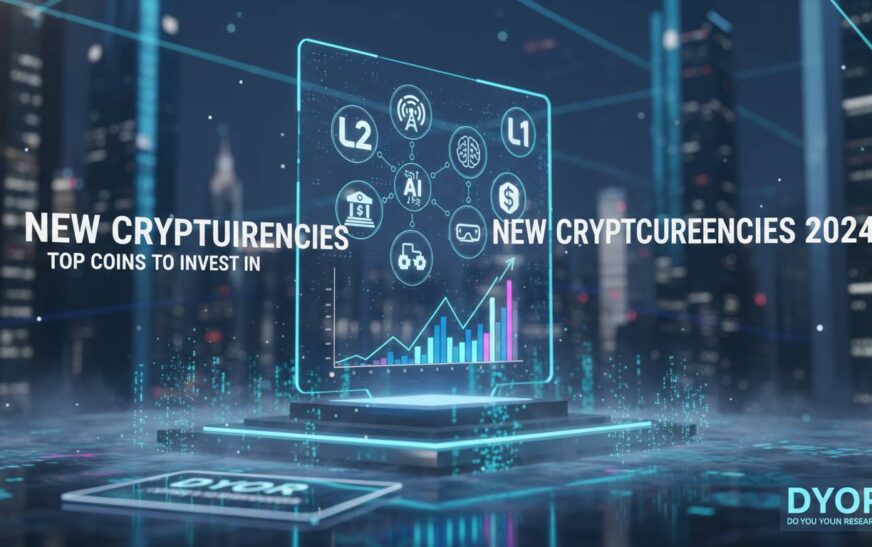
The cryptocurrency market in 2024 represents a pivotal moment for investors seeking exposure to digital assets beyond Bitcoin and Ethereum. With over 13,000 cryptocurrencies now in existence, identifying which new coins offer genuine utility versus speculative hype requires careful analysis of technology, adoption metrics, and market positioning. This comprehensive guide examines the most promising new cryptocurrencies gaining traction in 2024, evaluating their fundamentals, growth potential, and risk profiles for informed investment decisions.
The 2024 Crypto Landscape: Market Evolution and Opportunities
The cryptocurrency market has undergone significant transformation entering 2024, characterized by increased institutional acceptance, regulatory clarity in several jurisdictions, and technological advancements in blockchain scalability. Total market capitalization reached approximately $1.7 trillion by mid-2024, with altcoins capturing growing share as investors diversify beyond dominant Bitcoin holdings.
KEY MARKET STATS
- Total Crypto Market Cap: ~$1.7 trillion (CoinGecko, June 2024)
- Bitcoin Dominance: 52-54% range
- Daily Crypto Trading Volume: $50-100 billion
- Number of Active Cryptocurrencies: 13,000+
- DeFi Total Value Locked: $90-100 billion
This evolution creates opportunities for investors to identify projects with strong fundamentals that launched in 2022-2023 and have matured through market cycles. The focus has shifted toward utility-driven tokens with real-world applications rather than purely speculative assets.
Emerging Layer-1 Blockchains Worth Watching
New layer-1 blockchains continue competing for developer mindshare and user adoption, offering improvements over earlier generation networks in speed, cost, and interoperability.
Sui Blockchain
Sui, developed by Mysten Labs, launched its mainnet in 2023 and has gained significant traction in 2024. The Move-based blockchain offers horizontal scaling and near-instant finality, making it particularly suitable for gaming and consumer applications.
| Metric | Value |
|---|---|
| Native Token | SUI |
| Consensus Mechanism | Proof of Stake |
| Transaction Speed | <500ms finality |
| TVL (2024) | $300-400 million |
| Primary Focus | Gaming, consumer dApps |
Sui’s object-centric model differentiates it from account-based systems, enabling unique NFT and gaming implementations. The blockchain has secured partnerships with major gaming studios and Web3 projects, positioning it as a contender in the high-performance blockchain segment.
Aptos
Aptos launched in 2022 with substantial backing from venture capital and has expanded its ecosystem throughout 2024. Built on the Move programming language originally developed for Meta’s Diem project, Aptos emphasizes safety and scalability.
Alex Becker Just Revealed His Top 20 Cryptos for 2024!
He claims some of these coins can 100x this Bullrun
Here are all 20 cryptos + @ZssBecker comments on each:
———————-
"If you're not looking to lose money and if you cannot deal with… pic.twitter.com/Tme5kdxK7e
— Crypto Hub
(@CryptoHub210) March 31, 2024


The network processed over 200 million transactions in early 2024, with TVL growing to approximately $400 million. Aptos has focused on user experience improvements, including streamlined onboarding processes that reduce friction for mainstream adoption.
Analyst Insight: “Aptos and Sui represent the ‘Move ecosystem’ narrative gaining strength in 2024. Both offer technical advantages over EVM-compatible chains for specific use cases, particularly gaming and high-frequency applications.” — CoinDesk Research, 2024
Utility Tokens Driving Real-World Applications
Beyond infrastructure chains, utility tokens powering specific applications have demonstrated value capture as their underlying platforms gain users.
Render Network (RNDR)
The Render Network has emerged as a leading GPU rendering marketplace connecting creators with computing power. As AI and 3D content creation demand increases, RNDR’s utility in powering computational tasks has driven substantial growth.
| Platform Metric | Data |
|---|---|
| Total Renders Completed | 10 million+ (2024) |
| Active Node Operators | 100,000+ |
| Token Utility | Payment for GPU rendering |
| Market Positioning | Decentralized computing leader |
The integration of AI image generation tools has accelerated demand for Render’s rendering services, creating sustained token utility beyond initial 3D rendering use cases.
Arbitrum and Optimism (Layer-2 Solutions)
While technically launched earlier, Arbitrum (ARB) and Optimism (OP) have solidified their positions as leading layer-2 scaling solutions in 2024. These optimistic rollups process transactions off mainnet while maintaining Ethereum’s security, reducing costs by up to 90% compared to base layer transactions.
Layer-2 Comparison:
| Feature | Arbitrum | Optimism |
|---|---|---|
| Token | ARB | OP |
| TVL (2024) | $2.5+ billion | $1+ billion |
| Daily Transactions | 3-5 million | 1-2 million |
| Average Cost | $0.10-0.30 | $0.10-0.25 |
| Ecosystem Projects | 300+ | 200+ |
Both tokens have introduced governance systems allowing holders to participate in protocol decisions, creating engaged communities driving ongoing development.
Memecoins and Community-Driven Tokens
The memecoin sector has demonstrated remarkable resilience and growth in 2024, with several community-driven tokens achieving significant market capitalizations despite originating from internet memes or joke concepts.
Dogecoin and Shiba Inu Evolution
Dogecoin (DOGE), originally created as a parody in 2013, has evolved into a legitimate payment option accepted by major companies including Tesla (historically) and several major retailers. The token maintains the largest memecoin market cap, benefiting from sustained community support and celebrity endorsements.
Shiba Inu (SHIB) has developed beyond its memecoin origins, launching the Shibarium layer-2 blockchain in 2024 to support decentralized applications and reduce transaction costs. This transition from purely speculative asset to ecosystem utility represents broader maturation in the memecoin category.
Memecoin Market Data (2024):
| Token | Market Cap | Use Case Evolution |
|---|---|---|
| Dogecoin | $10-15 billion | Payment, tipping |
| Shiba Inu | $5-7 billion | Ecosystem, DeFi |
| Pepe | $500M-1B | Community token |
DeFi Innovation: New Protocols with Sustainable Models
Decentralized finance continues innovating with protocols offering improved capital efficiency, reduced slippage, and novel yield generation mechanisms.
Uniswap and DEX Evolution
Uniswap (UNI) remains the dominant decentralized exchange, with its V4 protocol introducing hooks that enable customized pool configurations. The governance token has benefited from substantial fee revenue sharing with liquidity providers, creating sustainable value accrual mechanisms.
DEX Market Position (2024):
| Protocol | Market Share | 24h Volume |
|---|---|---|
| Uniswap | 45-50% | $800M+ |
| Curve | 15-18% | $300M+ |
| PancakeSwap | 8-10% | $150M+ |
Liquid Staking Derivatives
Liquid staking tokens have gained prominence as Ethereum’s proof-of-stake transition creates demand for liquid representation of staked assets. Lido’s stETH and Rocket Pool’s rETH lead this category, allowing users to earn staking rewards while maintaining liquidity for other DeFi activities.
Risk Factors and Investment Considerations
Investing in new cryptocurrencies carries substantial risks that investors must carefully evaluate before committing capital.
Market Volatility
Cryptocurrency markets experience extreme volatility, with new tokens often demonstrating 50-90% drawdowns from all-time highs. The 2022 market cycle eliminated numerous projects that appeared viable during bull markets, highlighting the importance of fundamental analysis over momentum investing.
Risk Assessment Framework:
| Risk Type | Mitigation Strategy |
|---|---|
| Project Failure | Research team, tokenomics, use case viability |
| Regulatory | Geographic diversification, compliant platforms |
| Technical | Smart contract audits, code review |
| Liquidity | Trade on established exchanges, limit position size |
| Scam/Fraud | Verify team identity, check audit reports |
Due Diligence Requirements
Before investing in any new cryptocurrency, conduct thorough research including: team background verification, token distribution analysis, security audit results, community engagement quality, and competitive landscape assessment. Projects lacking transparent information or verifiable teams present elevated risk profiles.
Expert Guidance: “New cryptocurrency investors should allocate no more than 5-10% of their portfolio to high-risk altcoins and prioritize projects with clear utility, audited smart contracts, and established development teams.” — Bloomberg Crypto, Investment Guide 2024
Investment Strategy for 2024
Building a diversified cryptocurrency portfolio requires balancing potential upside with risk management principles appropriate for this asset class.
Portfolio Allocation Framework
Successful cryptocurrency investing typically involves tiered allocation strategies:
- Core Holdings (60-70%): Bitcoin and Ethereum provide market-leading liquidity and institutional acceptance
- Secondary Holdings (20-30%): Established altcoins with proven use cases and ecosystems
- Speculative Allocation (5-10%): Newer projects with higher risk/reward profiles
Dollar-Cost Averaging
Rather than timing market entry, consistent investment through dollar-cost averaging reduces impact of volatility. Weekly or monthly purchases of selected assets smooth average cost basis over time.
Frequently Asked Questions
What are the most promising new cryptocurrencies in 2024?
The most promising new cryptocurrencies include layer-1 blockchains like Sui and Aptos offering technical improvements over earlier chains, layer-2 solutions like Arbitrum and Optimism providing Ethereum scaling, and utility tokens like Render (RNDR) serving real computational demands. However, thorough personal research is essential before any investment.
Is it safe to invest in new cryptocurrencies?
Investing in new cryptocurrencies carries significant risk, including potential total loss of investment. New projects may fail, face regulatory action, or experience technical vulnerabilities. Only invest what you can afford to lose entirely, and conduct thorough due diligence on team backgrounds, tokenomics, and security audits.
How do I evaluate a new cryptocurrency before buying?
Evaluate new cryptocurrencies by examining: team experience and identity verification, token supply and distribution, use case necessity and competitive advantage, security audit results, community size and engagement quality, exchange listings and liquidity, and roadmap delivery track record.
What is the minimum amount to invest in cryptocurrency?
There is no minimum enforced amount for cryptocurrency investment, as most exchanges allow purchases of fractional tokens. However, investors should consider transaction fees relative to position size, ensuring fees don’t disproportionately impact returns on smaller investments.
Are new cryptocurrencies better than Bitcoin?
New cryptocurrencies are not inherently better than Bitcoin. While some offer innovative features or specific utility, Bitcoin remains the dominant cryptocurrency with highest liquidity, institutional adoption, and network security. Newer coins often carry higher risk with less proven track records.
When is the best time to invest in new cryptocurrencies?
Rather than timing market entry, dollar-cost averaging—investing fixed amounts at regular intervals—typically produces more consistent results than attempting to identify market bottoms. This approach reduces impact of volatility and removes emotional decision-making from investment processes.
Conclusion
The cryptocurrency landscape in 2024 offers diverse opportunities for investors willing to conduct thorough research and accept appropriate risk levels. Newer blockchains like Sui and Aptos provide infrastructure improvements, while established layer-2 solutions continue scaling Ethereum’s ecosystem. Utility tokens serving real computational demands have demonstrated value accrual mechanisms, and even memecoins have evolved beyond pure speculation in some cases.
Success in this market requires balancing portfolio allocation, conducting rigorous due diligence, and maintaining realistic expectations about volatility and risk. The distinction between sustainable projects and fleeting hype becomes clearer through fundamental analysis of team credentials, technical utility, and community engagement.
As always, cryptocurrency investment carries substantial risk, and readers should consult qualified financial advisors before making investment decisions. The market’s evolution suggests continued institutional adoption and technological advancement, creating ongoing opportunities for informed participants while warning away those seeking quick profits without understanding underlying fundamentals.
The post New Cryptocurrencies 2024: Top Coins to Invest In appeared first on 358 Casino.